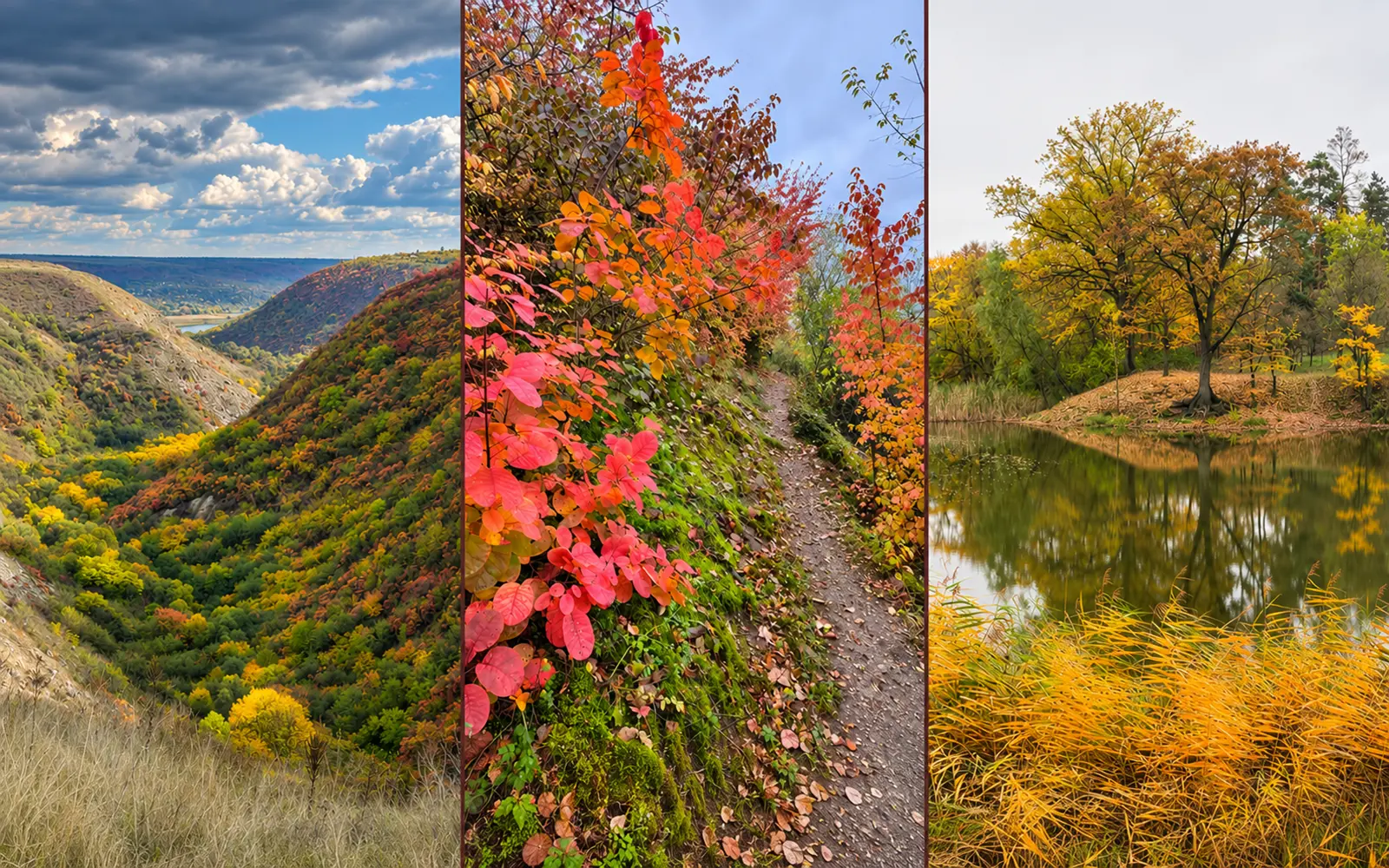
If I had to show Moldova in a single frame, I would photograph a hillside in mid-October. Rows of vines at the bottom, already yellow and rust, a forest above them in five colours at once, and over it all a sky so clean it looks as if someone polished it before the guests arrived. I drive people around this country all year, and autumn is when I have to talk the least. The view through the window does the job on its own. All I do is slow down wherever every phone in the back seat goes up at the same moment.
Moldova is small, and almost everything worth seeing can be visited on a day trip from Chișinău. In autumn that matters: in one day you can reach a forest, a river and a long village table, and still be back in the city for the evening. Here is where I go when people write to me: "We want to see your autumn."
Three months, three different autumns
Autumn here is long, and each month has its own character. September is still half summer: warm afternoons, grapes on the vine, the harvest starting in the villages, and markets suddenly crowded with grapes, peppers and pumpkins. October is the peak of the year. The forest changes colour within a few weeks, the vineyards turn yellow and red after the harvest, and on the first weekend of the month winemakers from all over the country come to Chișinău for Wine Day. November is quieter. The leaves are underfoot, fog sits in the valleys in the morning, there are hardly any tourists, and lunches get longer because nobody is in a hurry.
I can't tell you which month is best. I wait for October every year, and every year November tries to change my mind.
Codrii, where the trees take turns
Codrii is an old broadleaf forest in the middle of the country, and in autumn it is, for me, the most colourful place in Moldova. Oak, hornbeam, beech, ash and lime grow here, and each tree turns in its own time. The lime goes lemon first, the hornbeam fades to straw, the beech turns copper, and the oak holds out longest before darkening to bronze. In October the slope across the valley looks as if several painters worked on it and none of them consulted the others.
The walk is easy, an hour to an hour and a half over hills and through valleys, almost entirely under the canopy. Autumn light falls through the leaves in warm patches, everything rustles underfoot, and for some reason people start talking more quietly. We go at your pace: if you want to stop and look, we stop.
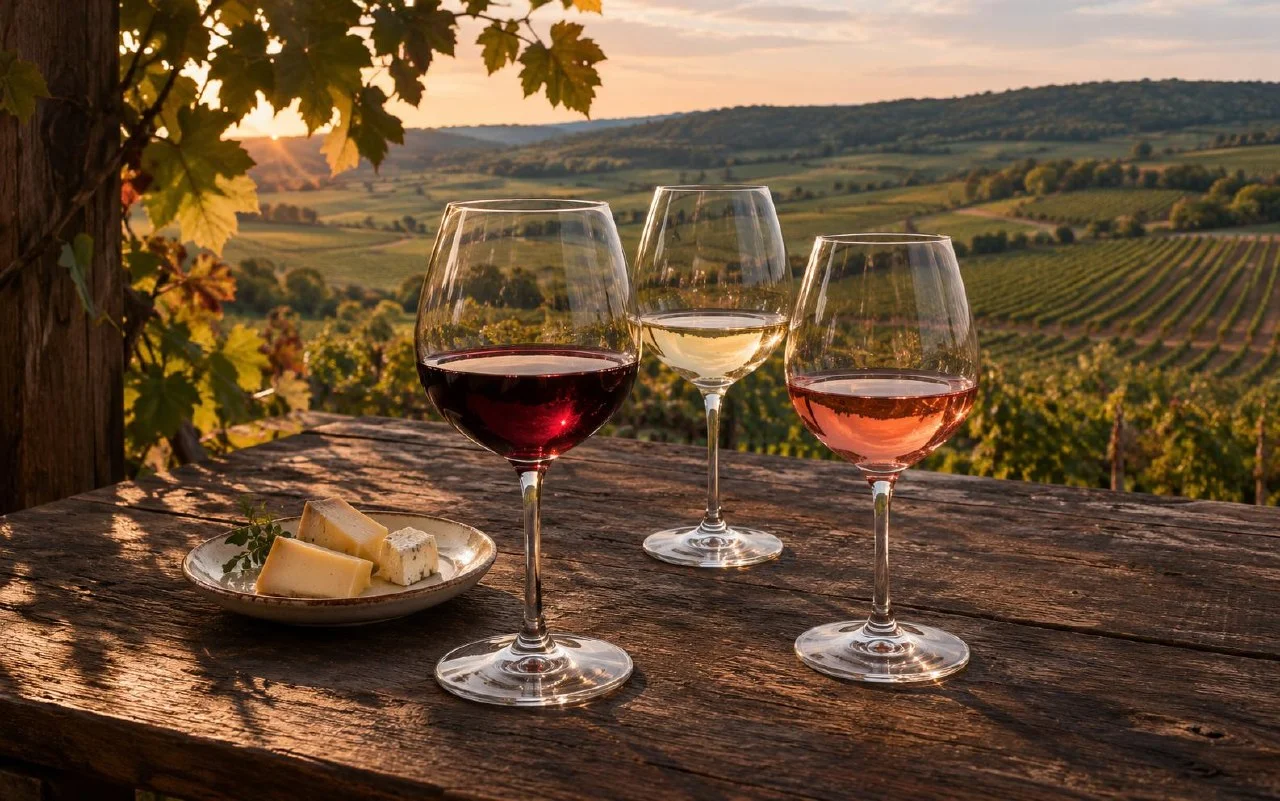
After the forest we drive to Mircesti, a small winery in the Ungheni district. The table there sits above the vineyards: rows of vines run down the slope, another slope rises behind them, and then another. In summer it is all green. In autumn the hills are striped yellow and burgundy. Every wine comes with Moldovan food, so the tasting is lunch, and we spend about two hours at the table. Nobody has managed to leave the table early yet. The whole day is here: Old forest, young winery.
The Dniester under a blanket of fog
Autumn in the north is my favourite season. The air turns clear, and from up high you see further than in summer. The road follows the Dniester, and you will want to stop every ten minutes.
At Tipova the car stays on top of the cliff, and we walk down to the cells of the cave monastery, about half an hour. In October the cliffs above the river are russet, the Dniester runs below, and the far bank is already Transnistria. Leave early enough and you may catch the fog: it lies in the river valley like milk in a bowl and melts away while you watch. The climb back takes just as long, and at this point I usually advise against heroics and suggest resting on every convenient rock.
Next door is Saharna: a monastery and a forest path to a waterfall, thirty to forty-five minutes there and back. Spring and autumn are the best time to walk here: it isn't hot, and the woods along the path are at their finest. Both monasteries fit into one day: Two monasteries on the Dniester.
If that is not enough, we go further north to Soroca. There you have the round fortress of 1499 on the Dniester and the Candle of Gratitude above the river, from where on a clear autumn day you can follow the water a long way in both directions. I wrote a separate article about that day.
Old Orhei in honey-coloured light
Old Orhei is good in any season, but autumn suits it best. The 13th-century cave monastery is cut straight into the limestone above a bend of the Răut, and monks still live there. In summer it is hot up there, and I have to rework the day to avoid the midday heat. In autumn that worry disappears. In the afternoon the sun sits lower, the limestone starts to glow with a warm honey light, and the slopes around the bend turn rust-red. Photographers go quiet at this point, everyone else simply sits down on a rock and looks. I don't hurry either group.
Lunch that day is in Butuceni, in a stone farmhouse with a wood-fired oven, run by the third generation of the same family. The plăcinte, filled pastries, are baked while you watch, and the wine comes from the vineyard opposite. In summer the oven seems unnecessary; in autumn your hands reach for it on their own. The same day we also make it to Cricova, where the car drives straight underground, and to Curchi monastery, white with green domes among the pines. Pines, admittedly, don't turn yellow in autumn, but against them everything else burns brighter. The route is here: Curchi, Old Orhei, Cricova, and I described it in detail in another article.
If you have several days, stay the night in Butuceni at a village guesthouse. For one reason: to get up at dawn. In the morning there is a service in the cave monastery, and afterwards you can walk along the bend while the fog over the Răut is still lying low. On mornings like that I usually keep quiet, and so far nobody has complained.
Autumn you can taste
I'll admit it: some guests come in autumn not for the leaves at all. In autumn the Moldovan table is more generous than at any other time of year. Pumpkin plăcinte, quince baked in the oven or cooked into jam, walnuts from the trees planted along village roads, and young wine, cloudy and slightly sweet, which people in the villages taste right after the grape harvest. You can find all of this in the city, but in my experience it tastes better at a village table, where the food is cooked in front of you and the hostess will put a second helping on your plate even if you firmly say no.
With wine, autumn works out nicely too. In the vineyards you see where it comes from: at Purcari the vines grow right on the winery's grounds, the same winery whose red was served at royal tables, and you can walk over to them. That is a separate day: Frescoes below ground, a red above royal tables. Underground, at Cricova and Milestii Mici, the wine waits patiently for its moment, and it is equally cool down there all year. So bring the jumper I will remind you about, even in a warm September.
How to catch a Moldovan autumn
In short: come in September for warmth and grapes on the vine, in October for colour. November is for those who like quiet and empty roads: the days are short by then and I plan the day around sunset, but lunch can last as long as you like.
A week in autumn comes together easily. You can head north along the Dniester, spend a night in Soroca and have lunch with a local family, or watch the sunrise over the Răut in Butuceni. Drives are short, one to three hours a day, and the rest of the time goes on walks, food and conversation. I build that kind of trip around your interests: The full journey.
Bring comfortable shoes for rocky ground if we are going to Old Orhei or Tipova, a warm layer for the evening and that jumper for the cellars. I take care of the rest: the car, the driving, the stories in English, German, Russian or Romanian, and a table where autumn tastes best. Only your group is in the car, the route changes as the day goes, and if you want another half hour above the Dniester, we stay.
Moldovan autumn doesn't wait: the forest holds its colour for only a few weeks, and one strong wind can end the season overnight. If you have been meaning to come, write to me and I will put together a day, or several, around your autumn: One day in Moldova, built around you.